Statenville’s dirty little secret
Dead Shot“Statenville’s dirty little secret” names the hidden arrangement beneath the town’s close-knit respectability: Cloverdale Industries’ illicit drug operation, protected by employees, influential local figures, and a culture of enforced silence. The phrase is not merely colorful small-town gossip. It identifies a system in which economic dependence, secrecy, intimidation, planted evidence, and violence combine to preserve the appearance of civic stability.
Meaning in the Town’s Public Life
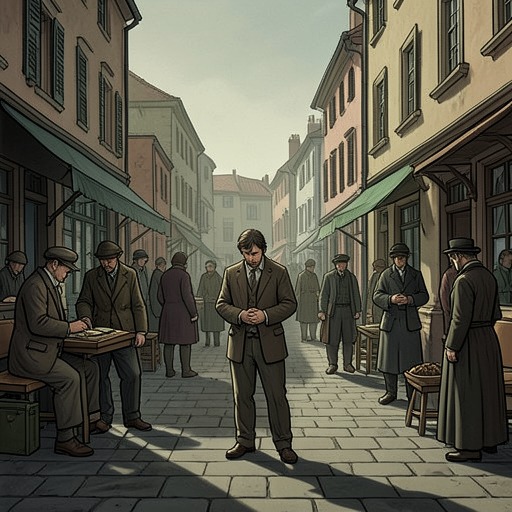
The expression first emerges from the contrast between Statenville’s self-image and its response to the deaths of three young people. Kelly Mendoza observes that Statenville is a tight-knit community, yet nobody seemed to care when the children died. Cal Murphy answers that the indifference may be part of “Statenville’s dirty little secret,” because everybody appears to be hiding something. The phrase therefore converts an atmosphere of suspicion into a structural explanation: the town’s silence is not an accidental collection of private indiscretions, but evidence that public concern has been subordinated to a shared secret.
Cal immediately distinguishes this secret from ordinary small-town hypocrisy. An affair between a mayor and a secretary might belong to the familiar category of local scandal, but the Statenville secret is different because someone is willing to kill to protect it. The expression thus carries a sharp escalation in meaning. It begins as a description of concealed knowledge and becomes a shorthand for the lethal interests behind that concealment.
The Secret as an Organized Rule
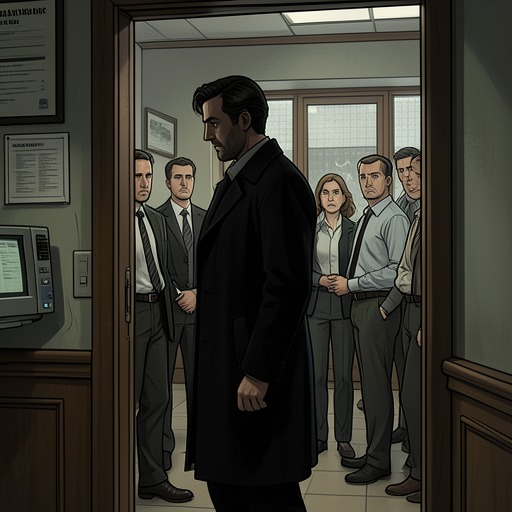
The secret is sustained through explicit internal discipline. At Cloverdale Industries, workers are warned to remember The Golden Rule when reporters have broken into the facility. The instruction is presented as a shared code, and the people outside the janitor’s closet mutter their agreement before being assigned overnight deliveries to Seattle, Portland, and San Francisco. The rule’s public-sounding name disguises an operational command: protect the product, keep a low profile, and prevent outsiders from becoming interested.
Gold’s employment practices reveal how deeply this secrecy has been institutionalized. He conducts rigorous background checks on prospective employees and even reviews current staff, making the company’s secret a condition of employment. Workers understand that disclosure would cost them their well-paid jobs and could send them to federal prison. Closed corporate gatherings reinforce the seriousness of the business, turning fear of punishment into a collective workplace norm. The secret survives not because every participant is equally powerful, but because the organization makes complicity appear necessary for continued security and income.
From Prosperity to Coercion
The town’s economic story provides the secret with its most persuasive public justification. Walker, posing as an innocent basketball coach and part-time janitor, has spent five years undercover while investigating what may be one of the largest drug cartels in the Pacific Northwest. His cover allows him to move through the community as a seemingly ordinary man, but the length of the operation also shows how long the criminal system has been embedded in everyday life.
Gold tells himself that the operation protects Statenville from becoming another economically depressed rural ghost town. The thought helps him quiet his conscience, yet he recognizes that the enterprise was never truly about Statenville or its people. This contradiction defines the phrase’s moral force: “Statenville’s dirty little secret” is defended through the language of community survival, while its actual beneficiaries preserve power through the drug trade and the suppression of evidence.
Exposure and the Turn to Cleanup
The secret becomes most dangerous when federal investigation threatens to make it public. Gold is alarmed to discover that Walker is a federal agent with access to every room at Cloverdale Industries and that Walker has been working with another agent. Walker’s five-year cover has allowed him to gather evidence, but his impatience and a recent misstep create the possibility that the town’s protective machinery can strike back before the case is ready.
Gold responds by abandoning Operation Fuego for Operation Cleanup. He has contingency plans for the possibility that investigators possess hard evidence, and he gambles that material not sent to federal superiors—or material he can render inadmissible—will not support a prosecution. His men restrain Walker and Mercer with plastic zip ties, force both FBI agents to take meth, and plant evidence intended to discredit them. A drugged janitor and a coach accused of giving drugs to students, including the dead ones, would appear unreliable even if they claimed to be federal agents. The secret is therefore defended not only by hiding facts, but by manufacturing an alternative explanation that turns investigators into suspects.
Narrative and Thematic Significance
The phrase gathers the novel’s central contrast between information and perception. Cloverdale’s internal language, background checks, corporate meetings, delivery routes, and Golden Rule all regulate who may know what. Mercer later tries to shape the story so that he becomes the hero and the FBI appears to have acted only to protect the public, but his ability to control that version is slipping because he must discover what Cal and Kelly know. The struggle over the secret is consequently also a struggle over authorship: whoever controls the available account can determine who is believed.
The expression’s final significance lies in its scale. What sounds like a quaint local euphemism encompasses the deaths of young people, a regional drug network, federal infiltration, the coercion of law enforcement, and attempted destruction of evidence. When Cal warns that the town’s willingness to hide its secret may extend further than anyone understands, the phrase becomes a measure of escalating danger. Statenville’s “dirty little secret” is not one concealed fact but a social order whose prosperity depends on silence—and whose survival becomes increasingly violent whenever the truth approaches the surface.